
NEUROTROPHIC FACTORS & DRUG DISCOVERY
(@ NEUROSCIENCES AND PHARMACOLOGY)
Brain-derived neurotrophic factor (BDNF) is a key neurotrophin that supports neuronal survival, differentiation, and synaptic plasticity. It plays a central role in learning, memory, and overall brain function. Alterations in BDNF signaling have been consistently observed across a wide range of diseases, including neurodegenerative disorders, psychiatric illnesses, and neurodevelopmental diseases. Disruptions in its pathways are considered fundamental contributors to disease mechanisms of these pathological conditions. BDNF is also a critical molecule within the heart–brain axis, and maintaining its balance is essential for both neural and cardiovascular health.
The research group of Neurotrophic Factors & Drug Discovery is dedicated to advancing the understanding of BDNF dysfunction and therapeutic strategies to correct its dysfunction with the main objectives of:
1. Investigate the molecular mechanisms underlying the dysfunction of neurotrophic factors, particularly BDNF, in different pathological conditions, including Alzheimer’s disease, epilepsy, and Rett syndrome.
2. Identify new therapeutic targets related to the specific molecular alterations associated with each disease and develop innovative pharmacological strategies to reverse neurotrophic factor dysfunctions.
To do so, we work as part of a larger, interconnected research network within the Instituto de Farmacologia e Neurociência, fostering strong scientific collaboratios, working as an integral part of the Neuronal Communications and Synaptopathies Lab at the Faculdade de Medicina, Universidade de Lisboa.
RESEARCH TEAM

Diógenes, Maria José, PharmD, PhD
GROUP LEADER
Maria José Diógenes is PharmD, Master in Neurosciences and PhD in Biomedical Sciences, Basic Neurosciences. In 2018 Maria José Diógenes obtained the Aggregation in Medicine, Pharmacology, Faculty of Medicine, University of Lisbon (FMUL). Maria José Diógenes is Associate Professor of Pharmacology and General Therapeutics at FMUL, certified pharmacologist by EPHAR and researcher at FMUL, where she coordinates a research group focused on strategies to restore the actions of neurotrophic factors in pathological conditions. Maria José Diógenes has experience as principal investigator of several nationally and internationally funded projects. She has supervised over 25 MSc students, 11 PhD students (5 ongoing) and co-supervised 4 PhD students (2 ongoing). Maria José Diógenes was the president the Portuguese Society of Pharmacology until February 2025, is the president of the pedagogical council of FMUL, member of the executive committee of EPHAR and member of the Committee for the Evaluation of Medicines of INFARMED.
ORCID ID: 0000-0001-5486-6246
E-mail: diogenes@medicina.ulisboa.pt
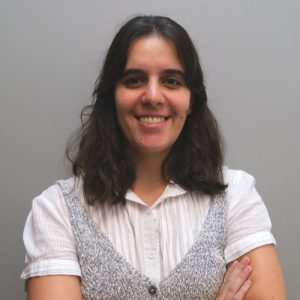
Miranda-Lourenço, Catarina, MD, PhD
Research Fellow
Catarina investigates the contribution of adenosinergic system dysregulation and impaired BDNF/TrkB signaling in Rett Syndrome, with a particular focus on their potential as therapeutic targets.
She has developed solid expertise in in vitro, in vivo, and ex vivo experimental methodologies. Her laboratory skills include western blot, ELISA, immunohistochemistry, and RT‑qPCR. She is proficient in rodent handling and welfare in the context of Rett Syndrome models, as well as behavioural testing and drug administration. Her ex vivo experience encompasses brain isolation and dissection, cerebrospinal fluid, blood and organ collection, and electrophysiological recordings, providing an integrated framework for translational neuroscience research.
Catarina completed the CAML PhD Program in Biomedical Sciences with specialization in Neurosciences at the Faculty of Medicine of the University of Lisbon (2016–2022), following a Master in Neurosciences (2013–2015) and a Bachelor in Biochemistry (2010–2013), both at the University of Lisbon. She also holds an Integrated Master in Medicine from the Faculty of Medicine of the University of Lisbon (2017–2023). Her clinical career currently includes a Residency in Family Medicine at Unidade de Saúde Local – Hospital São José (2025–2029).
ORCID: 0000-0002-9633-7999
E-mail: catarinalourenco@medicina.ulisboa.pt
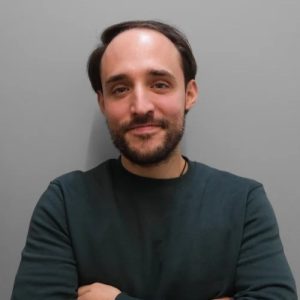
Suzano, Pedro, MSc
PhD Student
Pedro holds a Master in Biochemistry (2019–2022) and a Bachelor in Biochemistry (2015–2019), both from the Faculty of Sciences of the University of Lisbon.
Pedro is now a PhD student focusing on the computational study of potential new pharmacological tools for Alzheimer’s disease.
His technical expertise includes molecular modeling (enhanced sampling and Constant‑pH Molecular Dynamics), Molecular Docking and Virtual Screening, and drug design and development approaches, including pharmacophore modeling and molecular descriptor analysis.
ORCID: 0000-0002-4995-7415
E-mail: pmsuzano@fc.ul.pt
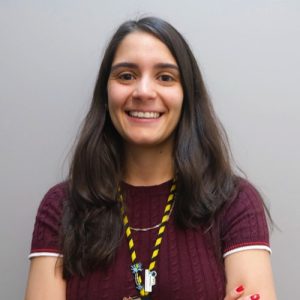
Ferreira-Manso, Mafalda, MSc
PhD Student
Mafalda holds a Master in Medical Biochemistry (2019-2021) and a Bachelor in Biochemistry (2014-2018), both from the Faculty of Sciences of the University of Lisbo-
Mafalda is now a researcher in the CAML PhD Program in Biomedical Sciences, with specialization in Neurosciences, at the Faculty of Medicine of the University of Lisbon (2023–2026). Her work focuses on microglia‑mediated neuroinflammation and BDNF/TrkB signaling in Alzheimer’s disease.
Her laboratory experience includes in vitro techniques (primary microglial and neuronal cultures, CHME3 cell lines, western blotting, immunofluorescence, confocal microscopy, calcium imaging, viral transduction and RT-qPCR), in vivo techniques (rodent handling and welfare, behavioural tests, drug administration) and in ex vivo techniques (brain isolation and dissection, organ, blood and cerebrospinal fluid collection, perfusions) and biological samples processing.
ORCID: 0000-0001-5074-8154
E-mail: mafalda.manso@medicina.ulisboa.pt
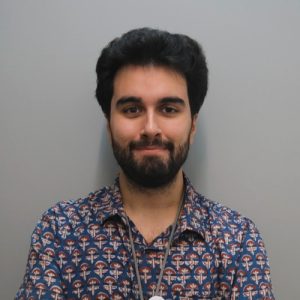
Costa-Coelho, Tiago, MSc
PhD Student
Tiago holds a Master in Biochemistry for Health (2018–2021) and a Bachelor in Biochemistry (2015–2018), both from NOVA University Lisbon.
Tiago is now a researcher in the CAML PhD Program in Biomedical Sciences, with specialization in Neurosciences, at the Faculty of Medicine of the University of Lisbon (2023–2026). His work focuses on assessing the potential paracrine toxicity and clearance systems associated with dysfunctional BDNF/TrkB signaling in Alzheimer’s disease.
His laboratory experience includes proficiency in extracellular vesicle isolation and characterization from cell secretome and human samples; in vitro methodologies (neuroblastoma and neuroglioma cell lines, primary neuronal, bacteria and yeast cultures, plasmid and viral transduction, western blotting, co‑immunoprecipitation, immunofluorescence and calcium imaging); in vivo techniques (rodent handling and welfare, behavioural tests, drug administration); and ex vivo procedures (brain isolation and dissection, cerebrospinal fluid and blood collection, and electrophysiological recordings).
ORCID: 0000-0003-3097-6728
E-mail: tcoelho@medicina.ulisboa.pt
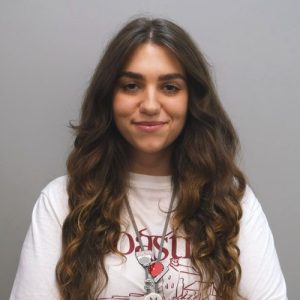
Inteiro-Oliveira, Sara, MSc
PhD Student
Sara holds a Master in Neurosciences (2019–2021) from the Faculty of Medicine of the University of Lisbon and a Bachelor in Biology (2016–2019) from Escola de Psicologia e Ciências da Vida, Universidade Lusófona de Humanidades e Tecnologias.
Sara is now a researcher in the CAML PhD Program in Biomedical Sciences, with specialization in Neurosciences, at the Faculty of Medicine of the University of Lisbon (2025–2028). Her work focuses on the search for novel therapeutic strategies targeting Alzheimer’s disease mechanisms, with particular emphasis on the BDNF/TrkB‑FL signalling pathway.
Her laboratory experience includes in vitro techniques (neuronal cultures, neuroblastoma cell lines, western blotting, immunofluorescence), in vivo techniques (rodent handling and procedures, drug administration), and ex vivo techniques (brain isolation and dissection, organ collection, electrophysiological recordings), as well as biological sample processing.
ORCID: 0000-0002-1604-656X
E-mail: sara86oliveira@medicina.ulisboa.pt
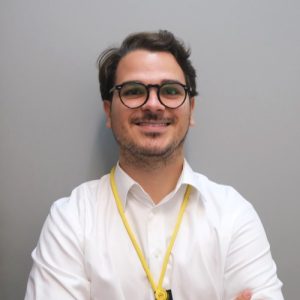
Atalaia-Barbacena, Henrique, MD
PhD Student
Henrique holds an Integrated Master in Medicine from the Faculty of Medicine of the University of Lisbon (2014–2018) and previously completed part of his medical training at the Faculty of Medicine of the University of Madeira (2012–2014). He is currently undertaking a Residency in Internal Medicine at Unidade Local de Saúde de Lisboa – Hospital Santa Maria (2019–2027).
Henrique is now a researcher in the CAML PhD Program in Medicine, with specialization in Pharmacology, at the Faculty of Medicine of the University of Lisbon (2024–2026). His work focuses on the pharmacokinetic and toxicity profiles of a new compound designed by the team for the treatment of Alzheimer’s disease.
His laboratory experience includes intermediate proficiency in in vitro techniques (endothelial cell cultures, western blotting, cell viability assays), as well as proficiency in in vivo techniques (rodent handling and welfare, drug administration). His ex vivo experience includes brain isolation and dissection, organ and blood collection, and toxicity and necropsy studies.
ORCID: 0000-0002-2270-8275
E-mail: henriquebarbacena@medicina.ulisboa.pt
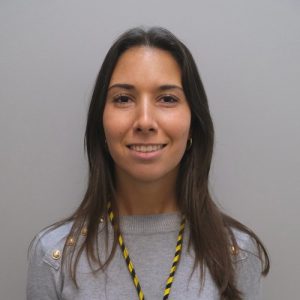
Rosário, Madalena, BSc
MSc student
Madalena holds a Bachelor in Biology from the Faculty of Sciences of the University of Lisbon (2020–2023).
Mariana is now a MSc student focusing on understanding potential neurogenic mechanisms in epilepsy, with particular emphasis on the BDNF/TrkB signaling system.
Her laboratory experience includes some in vitro methodologies, particularly immunohistochemistry.
ORCID: 0009-0005-5172-7693
E-mail: madalena.leandro@medicina.ulisboa.pt
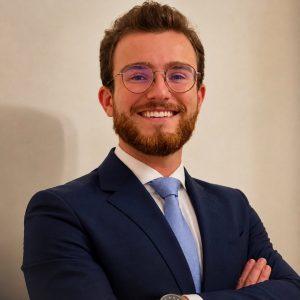
Alemãn-Serrano, Nuno, MD
PhD Student
Nuno holds an Integrated Master in Medicine from the Faculty of Medicine of the University of Lisbon (2017–2023). He is currently undertaking a Residency in Internal Medicine at Unidade Local de Saúde de Lisboa – Hospital Santa Maria (2025–2029).
Nuno is now a researcher in the CAML PhD Program in Medicine, with specialization in Pharmacology, at the Faculty of Medicine of the University of Lisbon (2025–2027). His work focuses on the study of BDNF/TrkB signaling dysregulation in Alzheimer’s disease.
His laboratory experience includes some in vitro methodologies (western blotting and biological sample processing) and ex vivo procedures (brain isolation, cerebrospinal fluid and blood collection).
ORCID: 0000-0003-2100-1240
E-mail: naleman@medicina.ulisboa.pt
Marçal, Carolina, BSc
MSc Student
Carolina holds an Integrated Master in Medicine from the Faculty of Medicine of the University of Lisbon (2017–2023).
Carolina is now a MSc student focusing on the study of BDNF/TrkB signaling dysregulation in Alzheimer’s disease.
Her laboratory experience includes in vitro methodologies, particularly western blotting.
ORCID: 0000-0003-2100-1240
E-mail: carolinamarcal@edu.ulisboa.pt
ONGOING PROJECTS
2025-2028: New cognitive protection strategy to treat epilepsy by preventing the impact of TrkB-FL-mediated cleavage. Fundação para a Ciência e Tecnologia. Role: Principal Investigator
2024-2026: Pan-European Network for Neuroscience Research Infrastructure and Strengthening of Support capacities. HORIZON Europe, HORIZON-WIDERA-2023-ACCESS-04-01 – Pathways to Synergies, Coordination and Support Action. Role: Member
2022-2025: Pacto de Inovação “HfPT – Health from Portugal [Componente 5 do Plano de Recuperação e Resiliência, ao abrigo do concurso no. 02/C05-i01/2022]. Plano de Recuperação e Resiliência. Role: Principal Investigator
2021-2025: TAT-TrkB, a novel neuroprotective compound to fight Alzheimer´s disease. Santa Casa da Misericórdia, Reference: MB35–2021. Role: Principal Investigator
INTELLECTUAL PROPERTY
Trkb-fl based polypeptides and their use in the treatment of alzheimer’s disease.
Inventor: Maria José de Oliveira Diógenes Nogueira, João Filipe Fonseca Gomes, André Jerónimo Santos, Ana Maria Ferreira de Sousa Sebastião, Carlos Bandeira Duarte.
Current Assignee: Faculdade de Medicina da Universidade de Lisboa, Fundação GIMM Gulbenkian Institute For Molecular Medicine, Universidade de Coimbra.
Worldwide Application: US (US20230321189A1), CA (CA3177866A1), JP (JP2023521071A), AU (AU2021248268A1), European Patent Office (EP4125999B1).
Classification: A61K38/1787 – Receptors; Cell surface antigens; Cell surface determinants for neuromediators, e.g. serotonin receptor, dopamine receptor; A61P25/28 – Drugs for disorders of the nervous system for treating neurodegenerative disorders of the central nervous system, e.g. nootropic agents, cognition enhancers, drugs for treating Alzheimer’s disease or other forms of dementia